
Reaching for the bleach is one of the most natural responses to mould. It's cheap, it's already under the sink, and the patch looks clean afterwards. The trouble is what happens next. Bleach, vinegar and other supermarket cleaners only reach the part of the mould you can see, so the fix is temporary. Within weeks to months the mould usually comes back, and samples we take afterwards often show more mould than an untouched surface would. That isn't the homeowner's fault. It comes down to how mould grows, which is worth understanding before you spend a weekend scrubbing.
Why surface cleaning fails: mould grows into the material
Mould growth isn't just a stain on the surface of a wall. It's a living network of microscopic, root-like threads called hyphae, which grow down into the material (the paper facing on plasterboard, timber framing, fabric, sarking paper, carpet backing) and feed on it. What you see on the surface is only the spore-producing part, sitting on top of a much larger hidden colony.
Bleach is a strong oxidiser. It bleaches the pigment out of surface spores and kills the visible ones — which is why a freshly bleached patch looks clean. But bleach is a water-based solution that cannot penetrate effectively into a porous substrate, and the active chlorine breaks down very quickly on contact with organic matter. The hyphal network underneath is untouched. Vinegar (dilute acetic acid) fares no better: it has some surface antifungal activity but cannot reach the colony in the cellulose layers beneath, and it actively adds moisture to a substrate that already has a moisture problem.
Either way, the surface looks clean, but the colony underneath keeps growing and producing new spores.
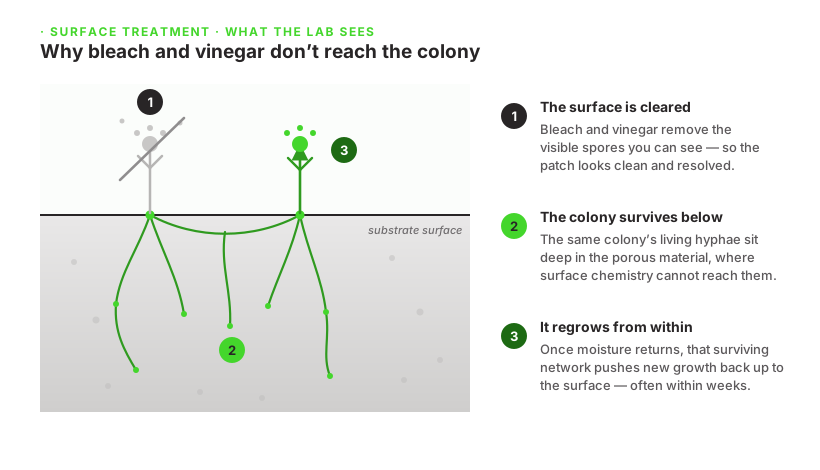
Surface treatment clears what you can see; the colony deeper in the material is untouched and regrows once moisture returns. This is the pattern we record on samples taken weeks after a DIY cleanup
How quickly mould comes back
How fast mould returns depends on how damp the material stays. In our lab work the pattern is consistent enough to predict:
- Wet areas (bathrooms, laundries, around showers, behind kitchen splashbacks): a few weeks. These materials stay damp enough that the colony underneath never slows down, and cleaning only removes the visible spores
- Areas with occasional dampness or seasonal condensation (windowsills, the outside walls of bedrooms, cupboards, behind furniture): around a month. The colony regrows with the next spell of condensation
- Normally dry areas after a one-off leak (once the leak is fixed): this varies, but any hyphae left in the material will start growing again as soon as moisture returns, even months later
Our lab results are consistent. Samples from walls that have been "cleaned" regularly show high counts of Aspergillus and Penicillium spores and fragments of hyphae, the signs of an active colony on a surface the owner thought was fixed. If you have cleaned an area and want to know whether it worked, a surface sample will tell you. Here is how to take one (PDF).
Why a DIY clean-up can sometimes make things worse
This part surprises most people. Samples we analyse after a DIY clean-up often show more mould than we would expect on an untreated surface. There are two reasons:
- Spores get into the air. Brushing, scrubbing or wiping disturbs spores and lifts them into the air you breathe. Aspergillus and Penicillium spores are small enough (under 5 µm) to stay airborne for hours and to reach deep into the lungs. Air samples taken after a vigorous scrub often contain ten times or more the fungal particles found in the same room before cleaning
- The mould breaks into fragments. Scrubbing breaks the mould into small, light fragments that become airborne even more easily than spores. They carry many of the same allergens, and the person cleaning never sees them
This doesn't mean you should never clean mould. It means that scrubbing an established mould problem tends to spread it through the building, and into the air, rather than fix it. Knowing that helps you do things in the right order: find and fix the moisture source first, then deal with the mould.
When to call a professional remediator
A small patch of mould that hasn't spread into the material, such as a coin-sized spot on tiles or shower grout, can reasonably be cleaned yourself with gloves, a mask and an ordinary cleaner. Anything bigger should be handled by a remediator with IICRC (Institute of Inspection, Cleaning and Restoration Certification) credentials.
The relevant certifications are WRT (Water Damage Restoration Technician) and AMRT (Applied Microbial Remediation Technician). A proper remediation includes sealing off the affected area, HEPA air filtration during the work, removing mouldy porous materials rather than trying to clean them, and a Post-Remediation Verification (PRV). A PRV is an independent set of samples taken after the work to confirm the building is back to IICRC S520 Condition 1 (normal). Without one, neither the owner nor the insurer has independent evidence that the job is done.
The IICRC has a public directory of certified professionals at iicrc.org/iicrcgloballocator. Larger or insurance-related jobs should also have independent lab testing before and after the work, and that is usually where we come in.
What this means for your property
If you can see mould, there is almost always more that you can't. For a small, isolated spot on a non-porous surface, a careful clean is fine. Beyond that, cleaning the surface rarely fixes the problem, so it's usually cheaper, faster and safer to start with independent testing. Testing tells you which moulds are present, how serious the problem is and what remediation is actually needed. After that comes IICRC-certified remediation, then a PRV to confirm the work was successful.